





Ritalin is a widely prescribed stimulant medication used to treat attention deficit hyperactivity disorder (ADHD) and narcolepsy. Its active ingredient, methylphenidate, works by stimulating the central nervous system, increasing dopamine and norepinephrine levels in the brain. This helps improve focus, attention, and self-control in individuals with ADHD. However, Ritalin has a high potential for misuse and addiction due to its stimulating effects and the euphoria it produces.
According to the 2021 National Survey on Drug Use and Health, 3.7 million people in the United States misused prescription stimulants like Ritalin in the past year. Misuse often involves taking higher doses than prescribed or using the drug without a prescription to enhance cognitive performance or to achieve a high. This behavior leads to physical and psychological dependence.
The symptoms of Ritalin addiction include intense cravings for the drug, inability to control its use, and continued use despite adverse consequences. Other symptoms are neglecting personal and professional responsibilities, withdrawal from social activities, and experiencing withdrawal symptoms when not using the drug.
The causes of Ritalin addiction include prolonged medical use, recreational abuse, and genetic predisposition. Factors such as academic pressure, mental health disorders, and environmental influences also contribute to the development of addiction.
The effects of Ritalin addiction are profound, impacting both physical and mental health. Physically, addiction leads to severe cardiovascular issues, insomnia, and significant weight loss. Psychologically, it causes mood swings, anxiety, depression, and cognitive impairments. Socially, addiction results in strained relationships, legal problems, and financial instability.
What is Ritalin?
Ritalin is a brand name for the generic drug methylphenidate hydrochloride, a central nervous system stimulant prescribed to treat attention deficit hyperactivity disorder (ADHD) and narcolepsy. Ritalin helps boost cognitive focus and performance in individuals with ADHD, often having a calming effect on children with hyperactivity. Instead of increasingly stimulating patients, Ritalin allows people with ADHD to become less restless and distracted, improving daily functioning. Although methylphenidate has important therapeutic uses, it is also misused. It is categorized as a Schedule II substance by the U.S. Drug Enforcement Administration (DEA), indicating a high potential for abuse and dependence.
What is Ritalin Addiction?
Ritalin addiction is the misuse of ritalin to enhance concentration or achieve a euphoric high, leading to physical and psychological dependence. According to the 2018 study “Prescription Stimulant Misuse and Adverse Effects Among College Students” by Amelia M. Arria et al., misuse of prescription stimulants like Ritalin is prevalent among young adults, often leading to dependency and addiction. This addiction severely impacts one’s health, relationships, and daily functioning. Misuse often begins with taking higher doses than prescribed or using the drug without a prescription.
What are the Signs of Ritalin Addiction?
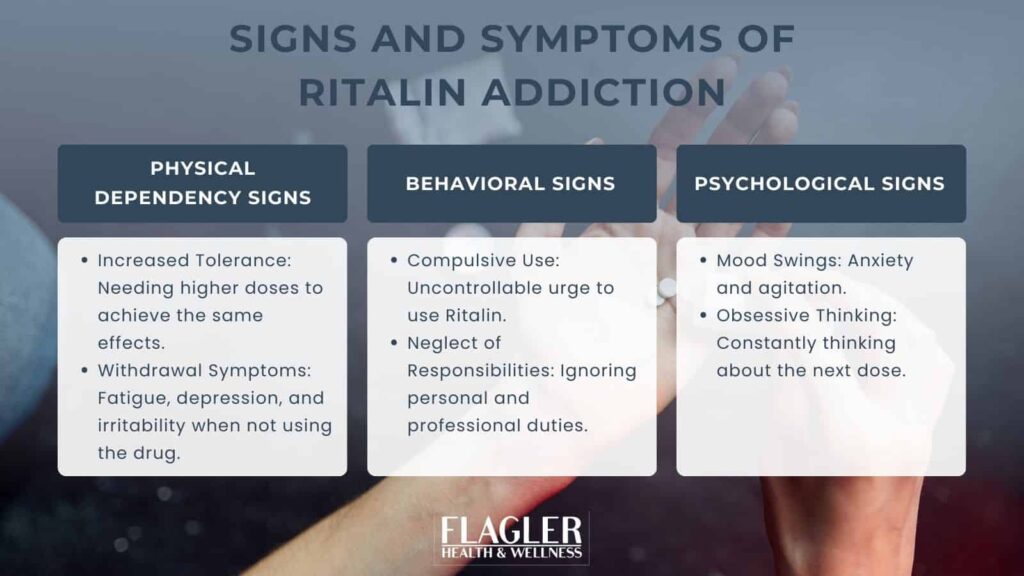
The signs of Ritalin addiction include physical changes like increased heart rate and blood pressure, behavioral changes such as increased secrecy and neglect of responsibilities, and psychological signs like mood swings and paranoia. Recognizing these signs is important for early intervention and treatment. According to the 2000 study “Methylphenidate Abuse and Psychiatric Side Effects” by W. Alexander Morton and Gwendolyn G. Stockton, the abuse of methylphenidate, the active ingredient in Ritalin, leads to significant psychiatric symptoms and dependency.
Physical Dependency Signs of Ritalin Addiction
- Increased Tolerance: People need higher doses of Ritalin to achieve the same effects, indicating the body’s adaptation to the drug. This escalation often leads to more frequent use and a stronger dependency.
- Withdrawal Symptoms: Experiencing fatigue, depression, and irritability when not using Ritalin, signifying physical dependence. These symptoms make it challenging to stop using the drug without professional help.
Behavioral Signs of Ritalin Addiction
- Compulsive Use: There is an uncontrollable urge to use Ritalin even when it is not needed. This behavior often disrupts daily activities and responsibilities.
- Neglect of Responsibilities: Due to their Ritalin use, individuals may ignore personal and professional duties. This neglect results in job loss, academic failure, and strained relationships.
Psychological Signs of Ritalin Addiction
- Mood Swings: Individuals may experience sudden changes in mood, including anxiety and agitation. These emotional fluctuations make it difficult to maintain stable relationships.
- Obsessive Thinking: It is common to think constantly about the next dose of Ritalin. This obsessive focus on the drug overshadows other important aspects of life.
What are the Causes of Ritalin Addiction?
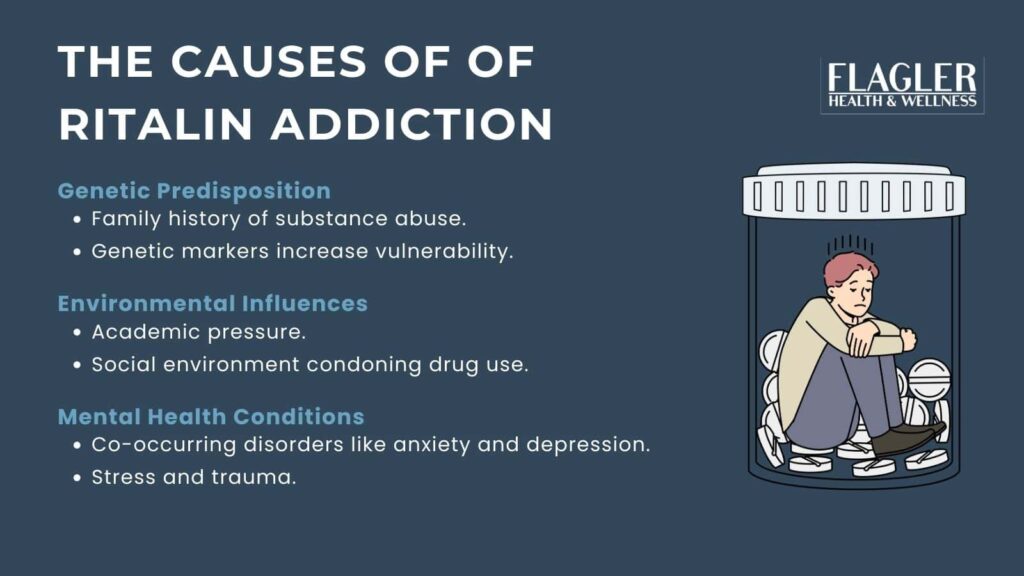
The causes of Ritalin addiction include genetic predisposition, environmental influences such as academic pressure and social environment, and mental health conditions like anxiety, depression, and ADHD. According to the 2000 study “Methylphenidate: Its Pharmacology and Uses” by Challman and Lipsky, addressing underlying mental health issues and providing support systems are crucial in preventing and treating Ritalin addiction.
1. Genetic Predisposition
- Family History: Individuals with a family history of substance abuse are more likely to develop an addiction to Ritalin. Genetic factors influence how a person responds to the drug and their susceptibility to dependency.
- Biological Factors: Certain genetic markers may make individuals more vulnerable to addictive behaviors. These biological predispositions increase the risk of developing a dependency on Ritalin.
2. Environmental Influences
- Academic Pressure: Students often misuse Ritalin as a study aid to enhance focus and performance. This misuse quickly leads to addiction, especially during periods of high academic stress.
- Social Environment: Peer pressure and social circles that condone or encourage drug use contribute to Ritalin addiction. Being in an environment where drug misuse is normalized increases the likelihood of developing an addiction.
3. Mental Health Conditions
- Co-occurring Disorders: Individuals with mental health issues such as anxiety, depression, or ADHD are at higher risk of Ritalin addiction. Using Ritalin to self-medicate these conditions leads to misuse and dependency.
- Stress and Trauma: High levels of stress or a history of trauma drive individuals to misuse Ritalin as a coping mechanism. This escalates into habitual use and addiction over time.
What are the Effects of Ritalin Addiction?
The effects of Ritalin addiction include severe physical health issues like cardiovascular problems and weight loss, psychological disturbances such as anxiety, depression, and psychosis, and significant social and relationship issues, including isolation, legal troubles, and financial instability. According to a 2009 study by Dr. Yong Kim, “NIDA Study Shows That Methylphenidate (Ritalin) Causes Neuronal Changes in Brain Reward Areas,” misuse of methylphenidate, the active ingredient in Ritalin, can cause neuronal changes in brain reward areas, affecting areas related to reward and addiction, similar to the effects of cocaine.
Additionally, the 2010 study “Ritalin Abuse: Clinical Effects and Management” by L. Thanos highlights that misuse can lead to serious health problems, including sleep disruption, increased aggression, and respiratory issues.
Physical Health Effects of Ritalin Addiction
- Cardiovascular Issues: Ritalin addiction leads to increased heart rate, high blood pressure, and a higher risk of heart problems. These cardiovascular issues become severe and potentially life-threatening.
- Weight Loss: Addiction often causes a reduced appetite, resulting in significant weight loss and malnutrition. This leads to weakened immunity and other health complications.
Psychological Effects of Ritalin Addiction
- Anxiety and Depression: Chronic misuse of Ritalin heightens feelings of anxiety and leads to persistent depression. These mental health issues significantly impair daily functioning and overall quality of life.
- Paranoia and Psychosis: In severe cases, Ritalin addiction may cause paranoia or psychotic episodes characterized by delusions and hallucinations. These disturbances are highly disruptive and require professional treatment.
Social and Relationship Effects of Ritalin Addiction
- Isolation: Individuals addicted to Ritalin often withdraw from social activities and relationships. This social isolation led to a breakdown in family ties and friendships.
- Legal and Financial Problems: The need to obtain Ritalin leads to illegal activities, resulting in legal issues. Additionally, the financial burden of maintaining an addiction leads to debt and economic instability.
What are the Treatment Options for Ritalin Addiction?
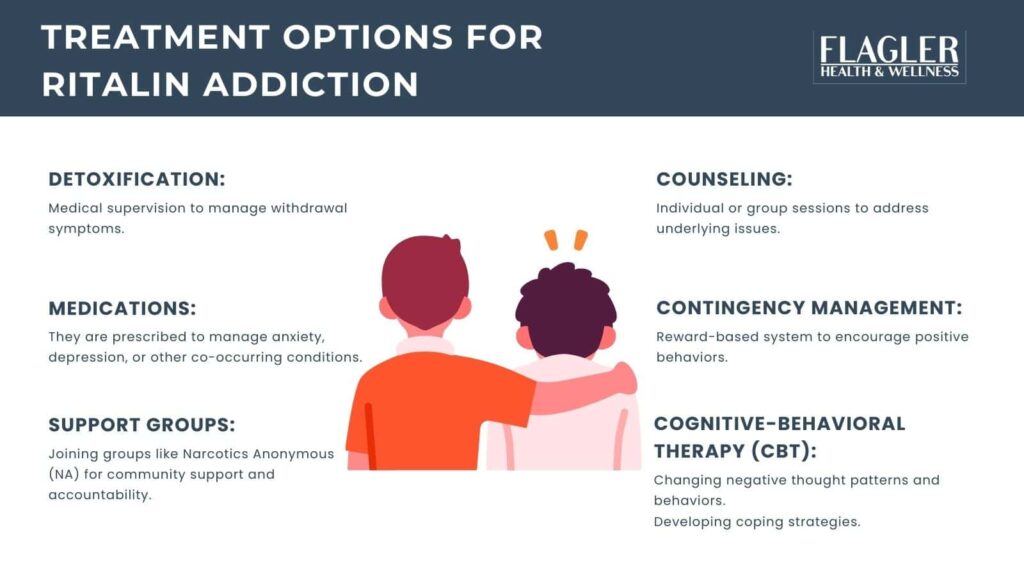
Treating Ritalin addiction involves a comprehensive approach to address the physical aspects, such as withdrawal symptoms and bodily health, and psychological aspects, which include mental health and behavioral changes. According to a 2024 article by Lauren Geoffrion, edited by Kayla Currier, and reviewed by Ryan Kelley on Rehabs.com, these treatment options are crucial for effective recovery from Ritalin addiction. The treatment plan may include:
1. Medical Interventions
- Detoxification: Medical supervision during detoxification helps manage withdrawal symptoms and ensures the safety of the individual. Detox is often the first step in the treatment process.
- Medications: Although there are no specific medications approved for treating stimulant use disorder, other medications may be prescribed to manage symptoms of anxiety, depression, or other co-occurring mental health conditions.
2. Behavioral Therapies
- Cognitive-Behavioral Therapy (CBT): CBT helps individuals recognize and change negative thought patterns and behaviors associated with addiction. It also teaches coping strategies to deal with triggers and stress.
- Contingency Management: This therapy uses a reward-based system to encourage abstinence and positive behaviors. Individuals receive incentives for maintaining sobriety and meeting treatment goals.
3. Support Systems
- Counseling: Individual or group counseling provides emotional support and helps individuals address underlying issues contributing to their addiction. Counseling also improves motivation and commitment to recovery.
- Support Groups: Joining support groups such as Narcotics Anonymous (NA)provide a sense of community and shared experiences. These groups offer ongoing support and accountability throughout the recovery journey.
How long does it take to develop a Ritalin addiction?
The time it takes to develop a Ritalin addiction varies from person to person. Factors such as dosage, frequency of use, individual physiology, and the presence of underlying mental health conditions influence the speed at which addiction develops. In some cases, addiction develops within a few weeks of misuse.
Can Ritalin addiction be treated at home?
While some initial steps, such as recognizing the problem and reducing usage, are started at home, it is generally recommended to seek professional help for Ritalin addiction. Medical supervision is important for managing withdrawal symptoms safely, and behavioral therapies are necessary for addressing the psychological aspects of addiction.
Is it possible to relapse after treatment for Ritalin addiction?
Yes, relapse is a common part of the recovery process for many individuals struggling with addiction. Continuous support, ongoing counseling, and participation in support groups help reduce the risk of relapse and support long-term sobriety.
Are there any long-term health consequences of Ritalin addiction?
Yes, long-term misuse of Ritalin leads to several health issues, including persistent cardiovascular problems, chronic mental health disorders such as anxiety and depression, and potential cognitive impairments. These effects underscore the importance of seeking early treatment.
How can family members support a loved one with Ritalin addiction?
Family members support a loved one with Ritalin addiction by encouraging them to seek professional help, providing emotional support, participating in family therapy sessions, and helping to create a stable, supportive home environment that promotes recovery.