






A state-of-the-art facility harnesses integrated smart building systems to optimize energy efficiency and operational performance. You’ll find advanced technologies like IoT sensors, digital twins, and AR navigation working alongside sustainable design elements and resource conservation strategies. Universal accessibility features guarantee the space serves everyone effectively, while community engagement programs cultivate social connection. These components form an inclusive ecosystem that continues to evolve with emerging innovations and best practices.
Smart Building Systems and Energy Efficiency
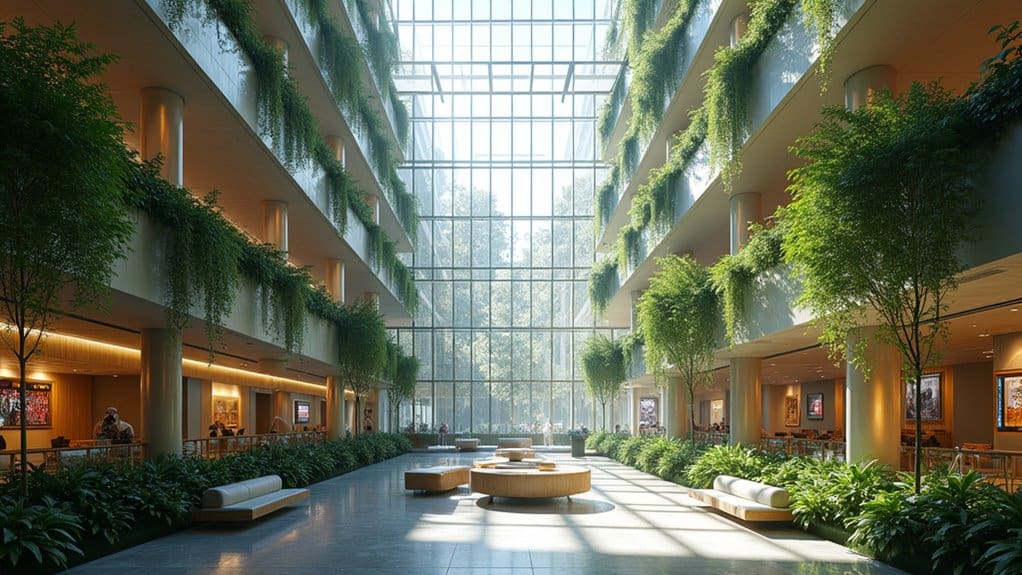
Nearly every modern state-of-the-art facility relies on smart building systems to optimize energy efficiency and reduce operational costs. Through integrated Building Automation Systems (BAS), you’ll achieve sweeping control over HVAC, lighting, and security components while gaining access to cross-system synergies. Since buildings consume about 40% of global energy, implementing these systems is crucial for sustainability. The global market for these solutions is expanding rapidly, with projections showing smart buildings will increase from 45 million to 115 million by 2026.
Advanced motor controls with variable speed drives cut energy consumption by 20-60%, while intelligent zoning enables precise environmental management. Smart systems that leverage IoT technologies and data help transform conventional buildings into more efficient structures. Your facility’s smart lighting system, equipped with motion and daylight sensors, can reduce electricity usage by up to 40%. Real-time occupancy analytics drive dynamic adjustments to both lighting and HVAC operations, ensuring energy is used only where and when needed. When combined with predictive energy management models, these systems analyze consumption patterns and forecast demands, potentially reducing your building’s total energy use by 10% through automated, data-driven optimization.
Advanced Technology Integration and Innovation
Building upon smart energy systems, modern facilities integrate advanced technologies that revolutionize operations across every domain. You’ll find real-time navigation systems using AR for wayfinding, while digital twins enable precise facility modeling and testing. These innovations support data-driven decision making through IoT sensors that monitor everything from energy usage to security breaches. Modern facilities also utilize mobile facility apps to enable on-the-go management and real-time updates of building operations. Ultrasonic monitoring provides predictive maintenance capabilities that help prevent costly reactive repairs. Strategic space planning enables facilities to optimize workspace configurations for enhanced employee performance and satisfaction.
Intelligent asset management has evolved through AI-driven automation and predictive analytics. You can now anticipate equipment failures before they occur, optimize maintenance schedules, and automate routine tasks. Robotic systems, like AMRs and automated sorting platforms, have transformed warehouse operations, while BIM technology creates detailed digital replicas for virtual testing and optimization. Together, these integrated technologies deliver measurable improvements in efficiency, with facilities reporting up to 30% gains in operational performance.
Sustainable Design and Environmental Impact
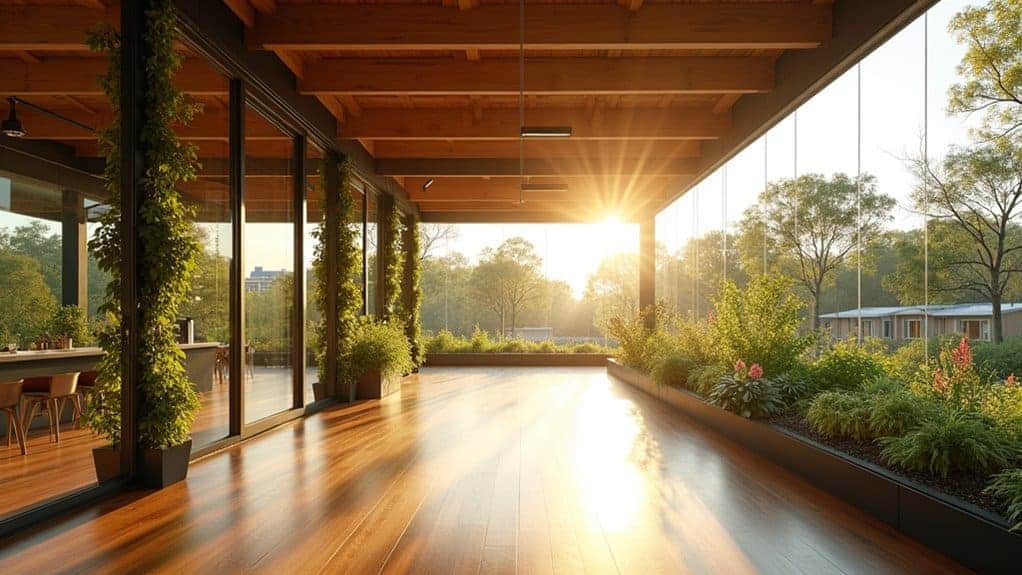
While traditional facilities focus primarily on functionality, state-of-the-art buildings now prioritize environmental stewardship through thorough sustainable design. You’ll find these facilities implementing resource conservation strategies that reduce energy consumption by 30-40% and water usage by 20-30% compared to conventional structures. Modern buildings are designed to support the clean energy transition away from fossil fuel dependence.
Through life cycle assessment approaches, modern facilities address their environmental impact across multiple dimensions. They’ll integrate smart building technologies for real-time energy optimization, utilize low-carbon materials to decrease CO2 emissions by up to 35%, and implement water-efficient systems to minimize freshwater withdrawal. Leading facilities are increasingly focused on selecting regenerative materials to reduce their carbon footprint. You’ll see sustainable sourcing certifications guiding material procurement, while performance monitoring systems track and optimize operational efficiency. These integrated solutions help combat the construction sector’s 37% contribution to global greenhouse gas emissions. State-of-the-art facilities often pursue LEED and BREEAM certifications to validate their comprehensive sustainability efforts.
Accessibility and Universal Design Features
Modern state-of-the-art facilities prioritize universal accessibility through thorough design strategies that extend far beyond basic ADA compliance. You’ll find comprehensive architectural elements working in concert with seamless navigation aids and inclusive communication supports to guarantee equal access for all visitors.
Today’s cutting-edge facilities embrace universal design principles, creating environments where accessibility seamlessly serves everyone’s needs.
Key accessibility features include:
- Wheelchair-accessible entrances with proper ramps, elevators, and strategically placed parking spaces
- Tactile signage, high-contrast finishes, and augmented lighting systems for improved wayfinding
- Assistive technologies including audio descriptions, sign-language interpretation, and acoustic adjustments
These features integrate with ongoing staff training and regular accessibility assessments to identify and address potential barriers. Leading institutions like the J. Paul Getty Museum showcase excellence in accessibility by offering hands-on displays specifically designed for visually impaired visitors. While data shows significant accessibility gaps still exist in many facilities, state-of-the-art buildings demonstrate how thoughtful universal design can create truly inclusive environments. The Department of Justice Standards provide the minimum requirements that all public facilities must meet to ensure accessibility for individuals with disabilities. The consideration of accessibility features has become increasingly important since the Architectural Barriers Act made them mandatory for federal buildings in 1968.
Community Engagement and Cultural Programming
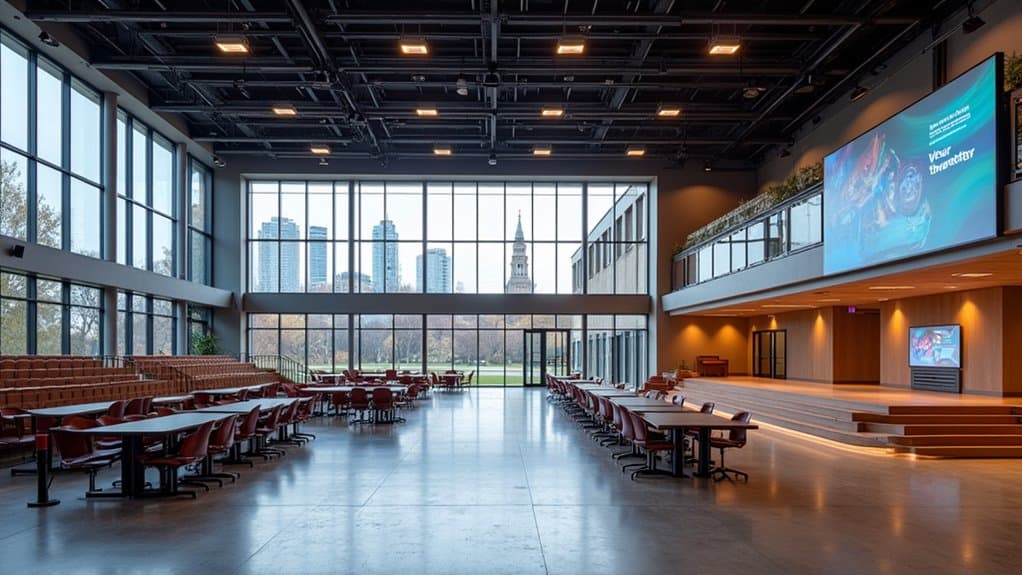
State-of-the-art facilities recognize that sturdy community engagement and cultural programming serve as catalysts for social cohesion and public health outcomes. Research shows that arts and cultural participation significantly improves life satisfaction, mental health, and physical wellbeing. Facilities must embrace cultural capital as a vital asset that Communities of Color bring to programming and engagement efforts. You’ll need to structure your programming around demographic insights, as only 25% of adults currently attend live performances monthly, with even lower participation rates among younger and minority populations.
These facilities should also address that rarely lonely feelings are reported by nearly 39% of arts attendees. To optimize impact, you’ll want to establish enhanced public private partnerships that address resource gaps in underserved areas. Implement customized volunteer recruitment strategies focusing on intergenerational knowledge transfer, particularly leveraging older adults’ expertise. Your facility should prioritize culturally resonant activities while removing access barriers through subsidized opportunities and transportation solutions. Consider social prescribing schemes in high-deprivation areas to improve community wellbeing and sustain engagement through targeted funding allocation.
Frequently Asked Questions
How Long Does It Typically Take to Construct a State-Of-The-Art Facility?
You’ll need to plan for a 3-6 year total timeline when constructing a state-of-the-art facility. The initial project planning phase typically requires 2-3 years for design approvals, engineering specifications, and stakeholder coordination. The actual construction timeline spans 1-3 years, depending on your facility’s size and complexity. Your timeline can extend further based on funding availability, regulatory requirements, and specialized equipment installation needs.
What Is the Average Cost per Square Foot for These Facilities?
Based on your cost analysis needs, you’ll find average costs per square foot vary considerably by facility type. From your facility financing perspective, expect to pay $209-210/sq.ft. for basic warehouses, $295-380/sq.ft. for schools, $450-498/sq.ft. for medical clinics, and $700-840/sq.ft. for advanced laboratories. High-end facilities like acute care hospitals can reach $888-1,020/sq.ft. Location and specialized requirements will impact your final costs tremendously.
How Many Specialized Staff Members Are Needed to Maintain Advanced Systems?
You’ll need approximately one specialized staff member per 50,000-75,000 square feet, depending on your facility’s complexity. Your specialized training requirements should include at least one EPA-certified HVAC technician, a licensed electrician, and a certified plumber. When implementing maintenance scheduling protocols, you’ll want to guarantee 24/7 coverage with overlapping shifts, typically requiring 3-4 professional-level technicians per specialized system plus supporting staff for excellent operation.
What Security Measures Protect High-Tech Equipment and Valuable Artistic Works?
You’ll need to implement layered security measures to protect high-value equipment and artwork. Start with biometric access controls at entry points, restricting access to authorized personnel only. Deploy motion-activated cameras with AI analysis capabilities throughout the facility, especially in storage areas. Add environmental sensors to detect changes in temperature or humidity that could damage artworks. Install smart locks with audit trails and integrate anti-tampering technologies to prevent unauthorized equipment access.
How Often Should Facility Systems Undergo Updates and Major Renovations?
You’ll need to establish preventative maintenance schedules based on system-specific lifecycles. Your plumbing and electrical systems typically require major updates every 5-10 years, while HVAC components need evaluation every 3-5 years. It is crucial to develop all-encompassing infrastructure modernization plans that account for both scheduled replacements and emerging technologies. Track work order patterns to identify when systems are approaching end-of-life and prioritize upgrades before critical failures occur.