








Today’s hospitals offer amenities crafted to bolster your healing experience through thoughtfully planned environments. You’ll find calming blue-green walls, natural lighting, and healing gardens that diminish stress and quicken recovery. Private rooms with noise reduction features guarantee better rest, while digital solutions like mobile apps and virtual nursing provide round-the-clock support. From personalized education programs to empathy-driven care teams, modern hospital features work together to transform your medical stay into a more comfortable, efficient odyssey. Let’s investigate how these amenities can sustain your path to wellness.
Creating a Peaceful Healing Environment

While medical expertise remains paramount in patient care, the physical environment plays a crucial role in recovery outcomes. You’ll find that modern hospitals are embracing sensory stimulation management through carefully chosen colors, lighting, and natural elements that reduce anxiety and promote healing. Patient perceptions greatly improve when artwork is thoughtfully incorporated into the facility design. Studies show that therapeutic horticulture integration, including healing gardens and nature views, can cut pain medication needs by 22% and reduce discharge times by up to 30%. You’ll notice calming blue-green walls that lower patient stress, along with natural lighting that supports healthy sleep patterns. Private, single-patient rooms equipped with noise reduction features guarantee better rest and fewer infections. Decentralized workstations near patient rooms allow nurses to provide faster and more efficient care. Whether it’s through digital skylights, tactile nature walls, or outdoor therapy spaces, today’s hospitals are creating environments where you’ll feel more comfortable and recover faster. Every time noise levels rise by ten decibels, patient stays are extended by approximately 7.5%.
Modern Technology Integration for Better Care
Beyond the physical environment, modern hospitals are revolutionizing patient care through sophisticated digital solutions. You’ll experience streamlined care delivery through cloud-based analytics and AI-driven automation that enable your healthcare team to focus more on your needs and less on paperwork. Thanks to advances in virtual nursing programs, healthcare facilities can now provide around-the-clock monitoring and support without requiring constant in-person staffing. With nearly 90% of executives expecting accelerated use of digital technologies in 2025, hospitals are rapidly adopting innovative solutions to enhance care delivery. Automated systems are transforming healthcare operations through robotic transportation systems that efficiently deliver medications, lab specimens, and supplies throughout the facility.
| Technology | Benefit | Impact |
|---|---|---|
| Mobile Apps | Easy scheduling & results access | Greater convenience |
| Remote Monitoring | Home-based care options | Reduced hospital stays |
| AI Systems | Predictive health insights | Earlier interventions |
| Smart Devices | Real-time essential sign tracking | Improved safety |
Your care team now uses integrated platforms that securely share your health information across providers, ensuring coordinated treatment. With wearable devices and remote monitoring, you can recover comfortably at home while staying connected to your healthcare providers. These digital solutions create a more responsive, personalized care experience that puts you at the center.
Staff Training and Patient Communication

When you’re in the hospital, you’ll find that well-trained staff members use proven communication models like RELATE to build genuine connections and trust with you during every interaction. Executive leadership and administrative staff receive the same essential communication training to ensure consistent patient experiences across all touchpoints. Research shows that effective communication significantly improves patient safety and reduces medical errors. Your healthcare team prioritizes clear explanations of your care plan, ensuring you fully understand your treatment options and next steps through active listening and empathetic responses. This approach helps prevent poor patient outcomes and reduces the risk of readmissions. Through structured communication training and cultural competency programs, staff members work to create an environment where you feel heard, respected, and confident in your care decisions.
Building Trust Through Empathy
Although technical excellence remains indispensable in healthcare, a hospital’s ability to build trust through empathy has become just as essential for patient outcomes and satisfaction. You’ll find that leading hospitals now implement comprehensive emotional intelligence training and staff mentorship programs to foster genuine patient connections. Research shows that lack of empathy remains one of the most frequent complaints in healthcare encounters today.
Through evidence-based approaches like Helen Riess’s training models, your healthcare team can learn to synchronize with patients both emotionally and physiologically. Today’s increased workload and stress among medical staff can significantly impact their ability to maintain empathetic connections. When you combine this with structured empathy exercises and ongoing skills coaching, you’ll create lasting improvements in patient-provider relationships. Support staff, from housekeeping to administration, play vital roles in building trust through attentive interactions. By empowering all team members and maintaining rigorous feedback loops, you’ll develop an environment where empathy flourishes and patients feel genuinely understood and cared for.
Clear Care Plan Communication
Clear communication consistently ranks among the most critical factors in patient care outcomes, with 83% of patients reporting that nurses effectively explain their daily care plans. Through timely care plan reviews and customized patient education, our staff guarantees you’ll understand every aspect of your treatment journey. Studies show that patients have expressed significant dissatisfaction with doctors’ availability, making clear nurse communication even more vital. Our implementation of interdisciplinary team rounds has significantly improved both physician and nurse communication with patients. Recent research using patient-centered approaches shows that effective communication strategies positively impact quality of care and satisfaction levels.
To improve your care experience, we’ve implemented proven communication strategies:
- Regular check-ins from nurse managers to reinforce care details and address concerns
- Personalized explanations that match your preferred learning style and language needs
- Digital tools and written materials to help you track medication schedules
- Family caregiver involvement in education sessions for better support at home
These approaches have demonstrated success in improving treatment adherence and reducing hospital readmissions, while ensuring you feel confident about managing your health after discharge.
Comfort-Focused Room Design
You’ll find that well-designed hospital rooms prioritize natural light through strategically placed windows, which can greatly enhance your mood and support your body’s natural healing process. The careful integration of sound-dampening features, like white noise systems and specialized door seals, guarantees you won’t be disturbed by hallway activity or equipment noise. Modern hospital rooms also incorporate acoustic treatments and quiet HVAC systems to create a tranquil environment where you can rest comfortably and recover more efficiently. Having easy-to-reach outlets near the bed ensures you can keep your personal devices charged and stay connected with loved ones during your hospital stay.
Natural Light Maximization
When hospitals prioritize natural light in patient rooms, they create environments that dramatically improve recovery outcomes and comprehensive well-being. You’ll find that spaces designed with optimal sunlight exposure support circadian rhythm regulation and enable controlled lighting levels throughout the day, leading to 41% shorter hospital stays and improved sleep quality.
Natural light’s impact on your recovery is substantial:
- You’ll need 22% less pain medication when staying in well-lit rooms
- You’ll experience reduced stress with just 3 hours of daily natural light exposure
- Your recovery time decreases considerably with consistent sunlight access
- Your overall contentment with care improves, joining 71% of patients who advocate for increased natural lighting
Smart room design features, like strategic bed placement and expanded windows, guarantee you receive maximum therapeutic benefits from natural light during your stay.
Noise Control Solutions
Three key factors make noise control essential for your hospital stay: rest quality, stress reduction, and healing acceleration. Modern hospitals now tackle unwanted noise through comprehensive acoustic performance analysis and real-time noise mitigation strategies.
You’ll find thoughtfully designed spaces that incorporate sound-absorbing materials, from specialized ceiling panels to noise-dampening flooring. Smart sensors monitor decibel levels throughout patient areas, alerting staff when noise exceeds comfort thresholds. The layout of your room is strategically planned, with staggered doorways and buffer zones to minimize sound travel from corridors.
During quiet hours, you’ll notice staff using “soft speech” protocols and coordinated workflows to reduce disruptions. These measures, combined with sound-proof curtains and updated equipment, create a peaceful environment that supports your recovery and guarantees restful nights.
Family Support and Visitor Amenities
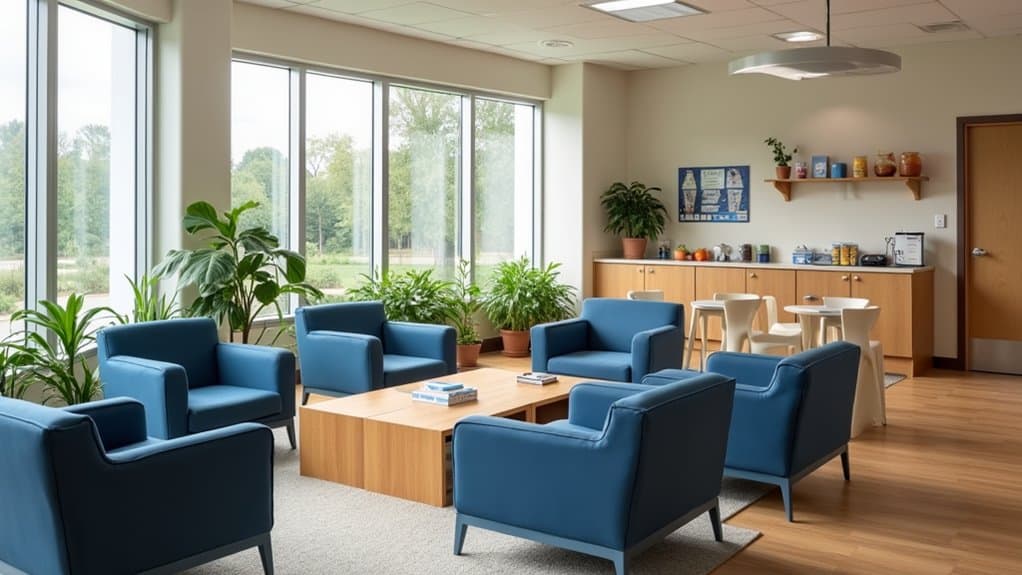
Modern hospitals recognize that healing extends beyond the patient to include their support network of family and friends. Through empathetic visitor support and family wellness programming, hospitals now offer extensive amenities that make extended stays more comfortable and manageable for everyone involved.
Hospitals today embrace holistic healing by supporting not just patients, but the entire network of family and loved ones who aid recovery.
Key family-centered features you’ll find in today’s leading hospitals include:
- Private rooms with daybeds and spacious layouts for family overnight stays
- 24/7 dining options with cultural dietary accommodations
- Dedicated spaces like quiet lounges, laundry facilities, and outdoor play areas
- Communication tools including secure messaging and video-call friendly spaces
These amenities aren’t just conveniences they’re essential components of patient care. Research shows that patients, particularly those with conditions like pneumonia, actively choose hospitals that prioritize family comfort, making these features vital for both patient satisfaction and recovery outcomes.
Post-Hospital Care Resources
Beyond family support during hospital stays, effective post-hospital care resources shape a patient’s path to recovery. The geographic distribution of post-acute resources varies notably, with urban areas offering more diverse care options than rural regions. You’ll find skilled nursing facilities most commonly, but specialized rehabilitation service availability may require travel, especially if you live in a rural area.
Your discharge planning team will help you navigate available options, whether it’s skilled nursing, home health care, or rehabilitation services. They’ll consider your location, medical needs, and insurance coverage. If you need specialized care like stroke rehabilitation or long-term acute care, you might need to look beyond your immediate area. Remember to ask about telehealth options and caregiver training programs to supplement your post-hospital care plan.
Frequently Asked Questions
How Do Hospitals Handle Cultural or Religious Preferences for Room Arrangements?
You’ll find that hospitals actively accommodate your cultural and religious needs through thoughtful room arrangements. They’ll often provide separate floor accommodations for specific religious communities and dedicated prayer rooms for spiritual practices. If you have special requirements, you can request room assignments that align with your beliefs. Your care team will work to guarantee you’re placed in spaces that respect your religious customs and cultural preferences.
What Options Exist for Patients With Special Dietary Requirements or Restrictions?
You’ll find extensive dietary options customized to your specific needs during your hospital stay. If you require gluten-free meal options, the dietary team will guarantee your meals are safe and properly prepared. For religious requirements, kosher dietary accommodations are readily available. You’ll work directly with clinical dietitians who’ll create a personalized meal plan that respects your restrictions while meeting your nutritional needs. Don’t hesitate to communicate your preferences to your care team.
Are There Transportation Services Available for Patients Without Personal Vehicles?
Yes, you’ll find several transportation options if you don’t have a personal vehicle. Most hospitals offer shuttle services that run on regular schedules between buildings and parking areas. You can also access ride-sharing program options specifically designed for medical appointments. If you’re facing transportation barriers, don’t hesitate to ask your healthcare provider about non-emergency medical transport services, which can be arranged for both routine visits and specialized care needs.
How Do Hospitals Accommodate Extended-Stay Patients With Work or Study Needs?
You’ll find many hospitals are adapting to help you stay productive during extended stays. You can access comfortable workspaces in private rooms, often equipped with desks and charging stations. You’ll have reliable internet connectivity through hospital Wi-Fi networks to keep up with work or studies. Staff members understand your need to balance recovery with responsibilities and can help coordinate your care schedule around critical meetings or deadlines. They’ll support your work needs while prioritizing your health.
What Emergency Protocols Exist for Non-English Speaking Patients and Their Families?
You’ll find 24/7 interpreters available through phone, video, or in-person services during medical emergencies. Your hospital provides multilingual signage in multiple languages and standardized protocols to guarantee clear communication during critical situations. While your family members can help in extreme emergencies, the hospital prefers using professional interpreters to avoid miscommunication. You’ll also receive translated handouts about your condition, and staff members are trained in cultural sensitivity to better support you and your family.